
Why Homes in South Louisiana Feel Damp Inside (And What Actually Fixes It)
Cajun Conservation • February 2, 2026
Why Homes in South Louisiana Feel Damp Inside (And What Actually Fixes It)
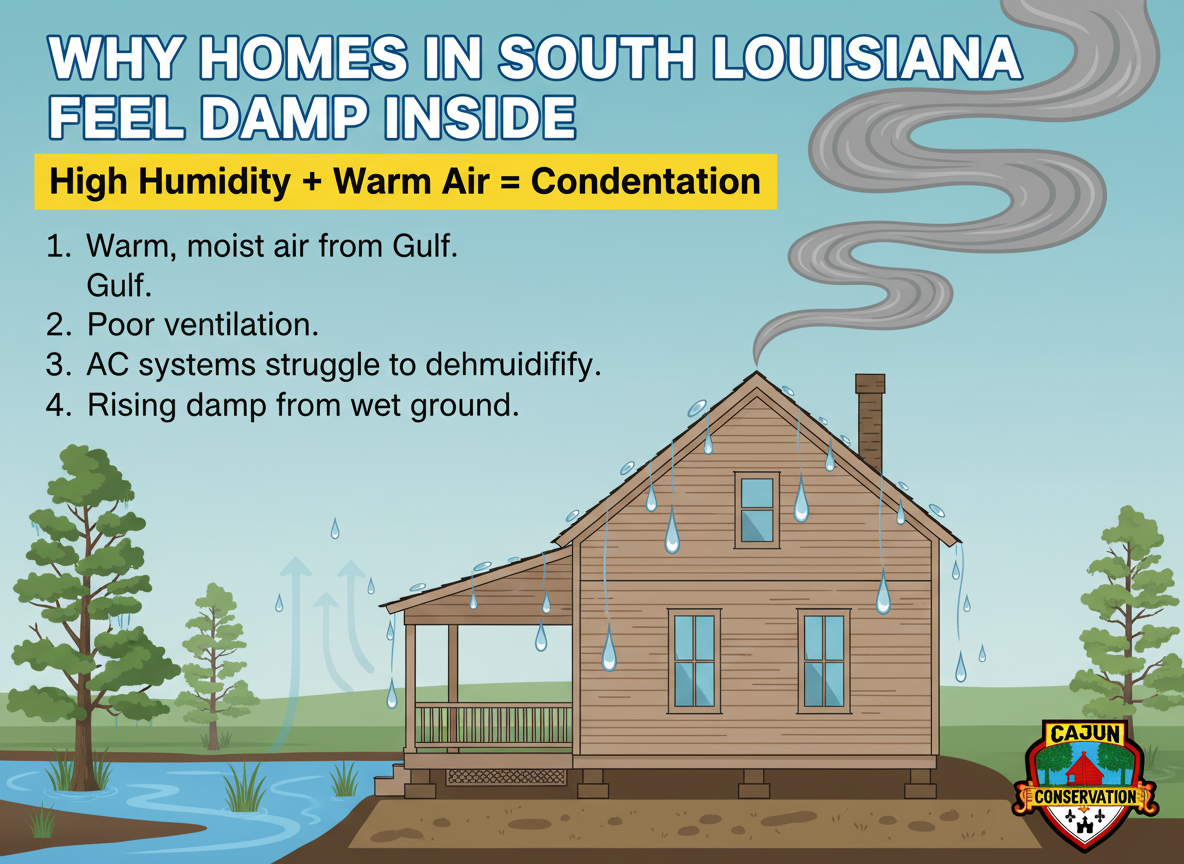
If you live in South Louisiana and your house feels damp, clammy, or "sticky" inside, you're not imagining it.
A lot of homeowners assume it's just "Louisiana being Louisiana"… but the truth is: there are real causes, there are real fixes, and some "fixes" actually make it worse. This post will explain what's going on in plain language so you can make smart decisions before spending money on the wrong solution.
What Does "Damp Inside" Really Mean?
Homeowners describe it like this:
- The air feels heavy
- Clothes or towels feel like they never fully dry
- The house smells musty
- You feel "hot" even when the AC is running
- Furniture feels slightly cool or sticky
- Bathrooms stay wet forever
- Windows sometimes show fog or moisture
This usually points to high indoor humidity.
What's the Normal Indoor Humidity?
A comfortable indoor range is usually 40%–55% humidity. In South Louisiana, we commonly see homes sitting at 60%–75% humidity (and sometimes higher). Once you stay above 60%, you're in the zone where mold can thrive, wood starts moving more, paint and caulk fail faster, and the home feels uncomfortable even at lower temperatures.
The Big Truth: Damp Houses Usually Aren't Just "Old"
Most damp-feeling homes have one or more of these problems:
1. The AC Is Cooling the House… But Not Drying It
This is the #1 reason a house feels damp inside. Your air conditioner doesn't just cool air — it's also supposed to remove moisture. If the system is oversized, runs short cycles, has wrong airflow, leaky ducts, or poorly placed returns, it may cool the house down fast without pulling enough water out of the air. So you get a house that's 70° but still sticky. Fix: HVAC evaluation and airflow balance.
2. Outside Air Leaking In
In Louisiana, outside air is often hot and wet. Common leak spots include around old windows and doors, attic access doors, recessed lights, bad weatherstripping, wall penetrations, and unsealed ductwork. Fix: air sealing and insulation strategy.
3. The Bathroom Fan Isn't Doing Its Job
A bathroom fan can be running but not removing moisture if it vents into the attic, the duct is crushed or disconnected, the fan is undersized, or no one runs it long enough. Fix: correct venting, correct fan size, and proper ducting.
4. Crawl Space / Raised Home Moisture
If your home is raised, moisture can come up from below through open vents, wet ground, plumbing leaks, or poor drainage. That moisture moves upward and makes your whole home feel damp. Fix: drainage, vapor barrier, and crawl space strategy.
5. Attic Heat and Humidity Problems
Attics in South Louisiana get extremely hot. If the attic is under-insulated, poorly ventilated, or has air leaks from the house, it can create a cycle of discomfort and moisture problems. Fix: air sealing, insulation, and proper attic ventilation.
6. Water Intrusion
Sometimes the house feels damp because there's actual water getting in — old window flashing leaks, roof leaks, siding leaks, plumbing behind walls, or failing caulk joints. Look for stains, bubbling paint, soft drywall, or recurring musty smell in one area. Fix: find the entry point before home remodeling finishes.
What DOESN'T Fix a Damp House
Lowering the thermostat often makes it feel worse — colder air plus high humidity equals clammy. Air fresheners cover the symptom, not the source. Painting over moisture doesn't fix it. And replacing flooring before moisture control means new floors can buckle or fail early.
What Actually Fixes It
The best solution depends on the real source, but the usual winners are: air sealing, correct insulation, HVAC airflow corrections, proper bathroom exhaust venting, crawl space moisture management, a dedicated dehumidifier, and stopping real water intrusion first.
If You're Planning a Remodel, Fix This First
If your home feels damp and you remodel without addressing it, you can end up with mold behind new walls, peeling paint, warped wood, flooring failures, and expensive redo work. A remodel should feel better and tighter — not the same problems with a new look.
Want Help Diagnosing It the Right Way?
At Cajun Conservation, we remodel homes across South Louisiana with a focus on long-term durability, older home construction realities, and craftsmanship that holds up in our climate. If your home feels damp inside and you're considering updates, the best first step is figuring out why — so your remodel lasts.