
Musty Smells in Older Homes — What They Usually Mean
Cajun Conservation • February 2, 2026
Musty Smells in Older Homes — What They Usually Mean
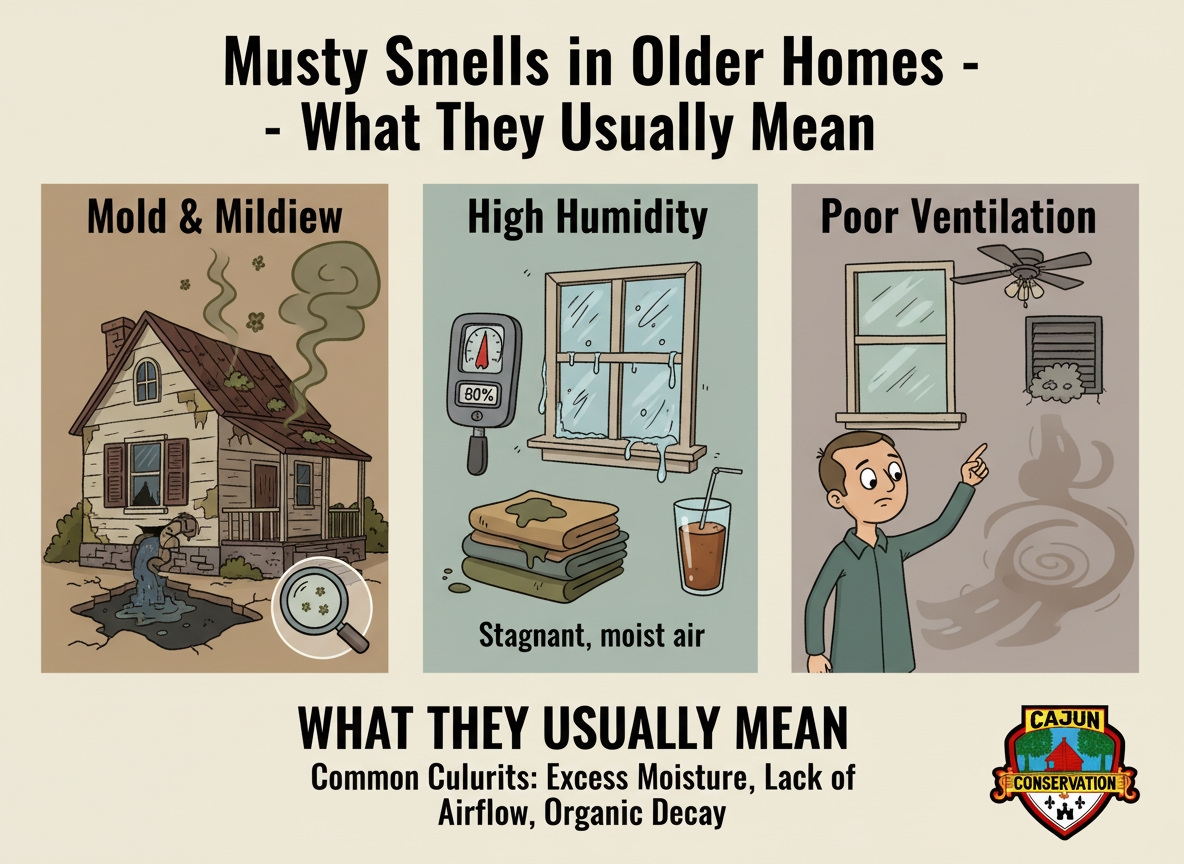
(And How to Fix the Cause, Not Just Cover It Up)
If you live in South Louisiana and your home has that musty "old house" smell , you're not alone.
Most homeowners try:
- candles
- air fresheners
- plug-ins
- extra cleaning
…and the smell still comes back .
That's because musty odor is almost never just "a smell." It's usually a sign of moisture + trapped air + organic material somewhere in the house.
Let's break it down in plain language.
What Does "Musty" Usually Mean?
That musty smell is typically caused by:
- humidity that stays too high
- dust and organic material (wood, drywall paper, insulation)
- stagnant air / poor ventilation
- a hidden moisture source
When moisture lingers, it feeds:
- mildew
- mold spores
- bacteria growth
- damp wood smell
Even if you don't see mold, the smell can still be present.
The #1 Rule: Musty Smell Usually Means Moisture Is Staying Somewhere
In South Louisiana, a house can smell musty from:
- a crawl space
- an attic issue
- a bathroom ventilation issue
- a small roof/wall leak
- an AC system not removing humidity
- old flooring or subfloor moisture
- damp closets with low airflow
Where Musty Smells Usually Come From (Most Common Causes)
1. Crawl Space / Raised Home Moisture
If your house is raised, the air under the home can affect everything above it.
Common causes:
- wet soil under the house
- poor drainage outside
- open vents letting humid air in
- plumbing leaks
- no vapor barrier
- standing water after heavy rains
If that air is damp and musty, it can move upward into the home through gaps in the floor, plumbing penetrations, unsealed subfloor areas, and old flooring seams.
2. Bathroom Humidity That Never Fully Leaves
Bathrooms are musty factories when moisture isn't removed correctly.
Common reasons:
- the fan vents into the attic (or nowhere)
- fan duct is disconnected or crushed
- fan is too weak
- shower moisture stays trapped in walls or grout
3. AC Is Cooling, But Not Dehumidifying
This is a huge one in Louisiana. Your AC should remove humidity, but it may not if it's oversized and short-cycles, airflow is wrong, ductwork leaks in the attic or crawl space, or return-air placement is poor. So your home is cool… but smells damp anyway.
4. Attic Mold / Damp Insulation / Poor Venting
Sometimes musty smell comes from above. If your attic has roof leaks, poor ventilation, bathroom fans dumping moisture into the attic, old insulation holding moisture, or major air leaks from the house into the attic, it can create a musty odor that drifts down through ceiling penetrations.
5. Hidden Water Intrusion (Small Leaks = Big Smells)
A tiny leak over time can create the smell before it shows obvious damage. Common leak areas include around windows, roof flashing, siding joints, old caulk seams, showers and tubs, under sinks, behind toilets, and around exterior doors.
6. Closets, Back Bedrooms, and "Dead Air Zones"
Musty smell can come from places with low airflow. These areas trap humid air: closets (especially on exterior walls), guest rooms rarely used, laundry rooms, and rooms with closed vents.
What NOT to Do (Common "Fixes" That Fail)
- Air fresheners mask the smell, but moisture continues.
- Ozone machines (without addressing moisture) offer temporary improvement, but the smell returns.
- Painting over it doesn't remove moisture or mold.
- Deep cleaning helps, but it doesn't stop humidity sources.
How to Find the Source (Easy Homeowner Steps)
Step 1: Identify WHERE it's strongest — one room? near floors? near ceilings? only closets? only after rain?
Step 2: Identify WHEN it's strongest — summer afternoons? mornings? after storms? after showers? when AC runs less?
Step 3: Use a cheap humidity meter — if your indoor humidity stays above 60% consistently, you've found a major clue.
What Actually Fixes Musty Smells in Louisiana Homes
Real fixes depend on the source, but common solutions include:
- fixing water intrusion (roof / windows / siding)
- correct crawl space moisture control
- properly venting bathroom fans to the exterior
- improving attic ventilation and stopping fan vents into the attic
- HVAC airflow corrections so it dehumidifies properly
- a dedicated whole-home dehumidifier (in some homes, a huge improvement)
- air sealing gaps between home and crawl space or attic
Why This Matters Before a Remodel
If you remodel without solving the musty problem, you can end up with mold behind new walls, warped wood and trim movement, flooring issues, and recurring odor even after "new" finishes. A good remodel should feel cleaner, tighter, healthier, and fresher — not "new but still musty."
Need Help Identifying the Source?
At Cajun Conservation , we work on older homes across South Louisiana and we're big on doing things the right way — so the finished remodel holds up in this climate.