
Why Caulk and Paint Fail Faster in Humid Climates
Cajun Conservation • February 3, 2026
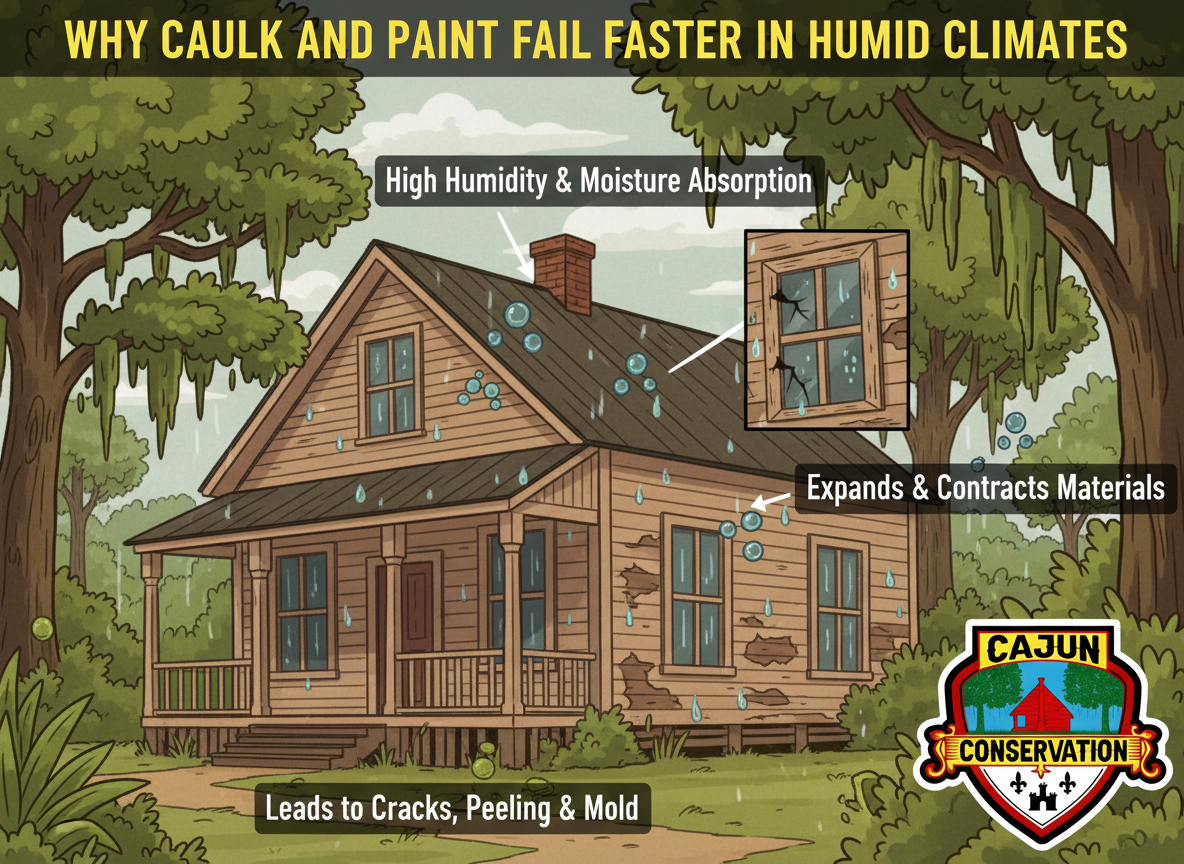
What South Louisiana Homeowners Should Know Before a Remodel
If you live in South Louisiana, you've probably dealt with caulk cracking way too soon, paint peeling on trim, gaps reappearing after fresh work, mildew stains in corners, or joints separating even after you fixed them.
The truth is: in humid climates, caulk and paint don't just fail because of time — they fail because of movement + moisture + the wrong products or details. Let's break it down so you understand what causes it and how to stop it.
Why Caulk and Paint Matter More Than People Think
Caulk and paint aren't just cosmetic — they're part of your home's protection system. They help block water intrusion, air leaks, pests, rot and mold development, and heat and humidity infiltration. So when they fail early, it's not just ugly — it can lead to expensive repairs.
The 4 Main Reasons Caulk and Paint Fail Faster in South Louisiana
1. High Humidity = More Wood Movement
Wood absorbs moisture from the air. When it absorbs moisture, it swells. When it dries out, it shrinks. This constant cycle causes caulk joints to crack and separate, paint to peel or bubble at the edges, and gaps to reopen at trim, windows, and door frames.
2. Wrong Caulk for the Application
Not all caulks are equal — especially in Louisiana. Paintable latex caulk dries fast and is easy to apply, but it has low flexibility and fails quickly in high-movement areas. Siliconized latex (siliconized acrylic) is a much better choice for South Louisiana trim work — it's paintable AND more flexible. Pure silicone is the most durable but can't be painted.
3. Surface Prep Is Often Skipped or Rushed
In Louisiana's heat and humidity, prep work is everything. Paint fails when applied over dirty, wet, or poorly primed surfaces. Caulk fails when applied over old, cracked caulk instead of being fully removed. Proper prep — cleaning, drying, priming — is the most important step.
4. Temperature and Humidity at Application
Applying caulk or paint during high heat or high humidity affects adhesion and cure time. The ideal conditions are 50–85°F and below 85% relative humidity. In Louisiana, that often means working early in the morning or on cooler days.
How to Make Caulk and Paint Last Longer in South Louisiana
- Use the right caulk — siliconized latex for trim, pure silicone for wet areas
- Remove old caulk completely before reapplying
- Prime bare wood, especially on exterior and high-humidity areas
- Paint in cooler morning hours when humidity is lower
- Use exterior-grade, mold-resistant paint in bathrooms and kitchens
- Inspect caulk lines every 1–2 years and touch up before full failure
When to Call a Professional
If you're seeing repeated failure in the same spots, it may not be a product problem — it may be a structural movement issue, moisture intrusion, or ventilation problem that needs to be addressed first. At Cajun Conservation, we diagnose the root cause before we ever pick up a caulk gun. That's how we make repairs that actually last.
Contact Cajun Conservation today for an honest assessment of your caulk and painting issues — and a lasting fix built for South Louisiana's climate.