
Why Paint Peels and Bubbles Faster in Louisiana Homes
- Cajun Conservation
- Feb 2
- 4 min read

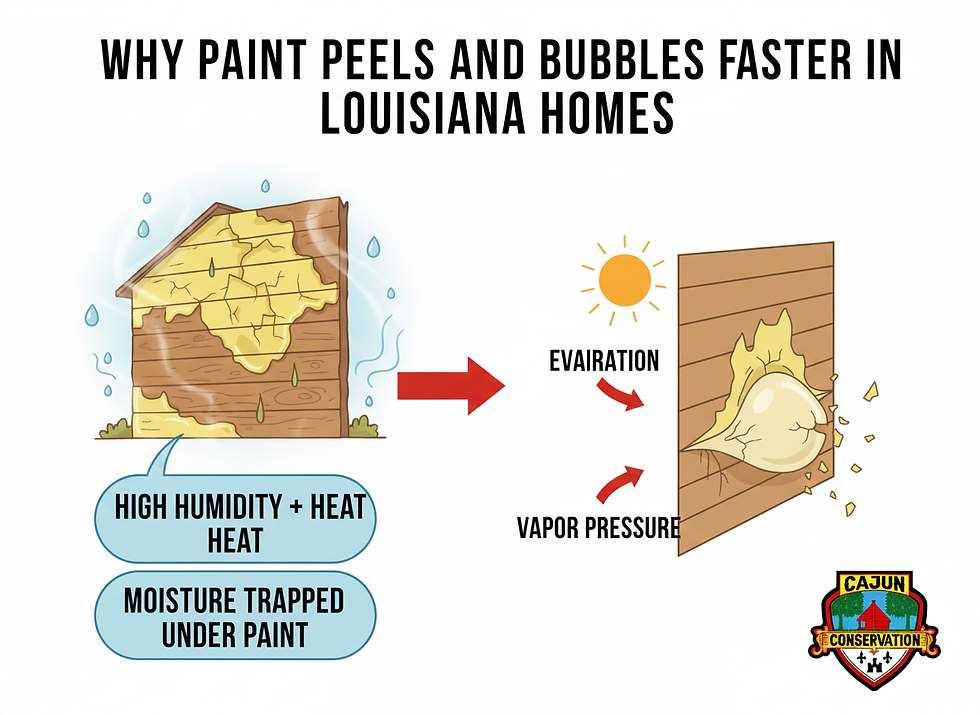
(And How to Stop It From Happening Again)
If you live in South Louisiana, you’ve probably seen it:
paint bubbling up in spots
peeling around windows and doors
flaking trim paint that “should’ve lasted longer”
blistering or soft paint on exterior wood
caulk lines cracking open way too soon
And the frustrating part is…it can happen even with expensive paint and “fresh prep.”
In most cases, paint failure isn’t because the paint is bad.It’s because the conditions underneath are wrong.
Let’s break it down in plain homeowner language.
What Peeling or Bubbling Paint Usually Means
Paint problems usually point to one of these root causes:
✅ moisture behind the paint✅ poor surface prep / wrong primer✅ wrong paint type for the surface✅ painting in the wrong conditions✅ wood movement + humidity cycling✅ trapped moisture in older materials
In Louisiana, moisture and heat are the main drivers.
The #1 Cause: Moisture is Getting Behind the Paint
Paint is not waterproof armor.
If moisture is coming from behind the paint, it can cause:
bubbling (blisters)
peeling sheets
soft spots
discoloration
mildew growth
Common moisture sources:
leaking windows
bad caulk joints
siding gaps
roof flashing leaks
plumbing leaks inside walls
damp crawl space air rising into walls
high indoor humidity condensing on cooler surfaces
✅ Key clue: if the paint fails in the same area repeatedly, it’s usually moisture-related.
Exterior Paint Fails Faster in Louisiana for 3 Big Reasons
1. The Humidity Attacks Every Weak Spot
Louisiana humidity doesn’t take breaks.
It works into:
end grain wood
joints
seams
nail holes
poorly caulked corners
Even tiny openings allow moisture intrusion.
2. The Sun Cooks Surfaces Hard
Heat + UV exposure breaks paint down faster here.
South- and west-facing walls often fail first.
Signs:
chalking (powdery paint)
fading
cracking
peeling
3. Wood Moves More Here
In humid climates, wood expands and contracts more.
That movement stresses:
paint film
caulk joints
seams between materials
When the caulk cracks, water gets in.When water gets in, paint peels.It becomes a cycle.
Interior Paint Can Peel Too (And People Don’t Expect It)
Interior paint issues often show up as:
bubbling near baseboards
peeling in bathrooms
peeling on exterior walls (inside the house)
stains that “bleed through”
This is usually caused by:
high indoor humidity
bathroom moisture
poor insulation
air leaks letting humid air into wall cavities
The Most Common Problem Areas
If you’re seeing paint failure, these areas are the usual suspects:
✅ Around windows
leaking flashing
old caulk failure
wood rot starting
water intrusion around trim
✅ Around exterior doors
poor threshold sealing
rain exposure
swelling wood
✅ Fascia / soffit edges
heat + moisture cycles
old wood
poor primer adhesion
✅ Bathrooms
poor ventilation
steam trapped in walls
wrong paint sheen/type
✅ Bottom of siding or trim
splashback from rain
water sitting on edges
bad drainage or landscaping contact

Why “Just Repainting” Often Fails Again
A lot of painters (and homeowners) treat paint like a cosmetic layer.
But if the real issues aren’t fixed, repainting becomes:
🧻 a temporary band-aid
You may get:
6 months of looking good
then the same bubbling/peeling returns
What Actually Stops Paint From Peeling (Real Fixes)
✅ Step 1: Identify the moisture source (if there is one)
This might include:
resealing windows correctly
repairing rot
correcting flashing
replacing damaged wood
fixing plumbing leaks
If you don’t fix the source, nothing else lasts.
✅ Step 2: Use the correct primer for the surface
Primer matters more than most people think.
Wrong primer = poor adhesion.
Common situations:
bare wood needs proper exterior primer
stain/tannin bleed needs stain-blocking primer
new patches need bonding primer
✅ Step 3: Use the right paint for the job
Not all paint is equal, and not all finishes belong everywhere.
Examples:
bathrooms usually need a more moisture-resistant setup
exterior trim needs durability + flexibility
interior flat paint hides flaws but isn’t always washable
✅ Step 4: Caulk correctly (and use the right caulk)
Bad caulk causes paint failure.
A good caulk job includes:
correct product type (flexible + paintable)
correct joint size
correct technique (not just smearing)
allowing cure time before painting
✅ Step 5: Paint in proper conditions
In Louisiana, painting at the wrong time can ruin the outcome.
Avoid:
painting before rain
painting in extreme heat
painting on damp surfaces
trapping moisture behind fresh paint
Sometimes the difference between “lasting” and “failing” is timing.

The Louisiana-Specific Truth
In this climate, paint isn’t just about color.
It’s a protective system made of:✅ prep✅ repairs✅ primer✅ caulk✅ correct paint✅ correct conditions
If any of those are skipped, paint becomes maintenance instead of protection.
If You’re Remodeling, Paint Failures Are a Warning Sign
Paint peeling often points to:
hidden moisture
wood rot beginning
air leakage issues
poor wall assembly performance in humidity
If you’re planning upgrades, paint problems can be a helpful signal that something deeper needs attention.
Need Help Getting It Done Right?
At Cajun Conservation, we work on homes across South Louisiana with a focus on:
durability in a humid climate
older home construction realities
craftsmanship that holds up long-term
We’re not interested in “make it look good for a month.”We want your home to look good and stay good.
Question for you:Is the peeling happening mostly outside, inside, or around windows and doors?


Comments