
What to Expect Before You Remodel Your Home in South Louisiana
- Cajun Conservation
- Feb 2
- 4 min read

Updated: Mar 23

Understanding the Unique Challenges of Remodeling
Homes built in the 1950s to 1970s are prevalent across South Louisiana. These homes often boast great locations and solid structures, making them ideal candidates for remodeling. However, they also come with a set of common issues that newer homes typically do not face. If you are planning a remodel on a home from this era, this post will guide you through:
Common issues to expect
What is worth fixing
Surprising challenges homeowners face
How to plan effectively without exceeding your budget
Why These Homes Are So Common Here
In many parts of Acadiana and the surrounding parishes, homes from this era were constructed during a significant growth wave. They typically feature:
More real wood than modern homes
Stronger framing than some newer production builds
Simpler layouts that remodel well
Additions and renovations completed over time
These characteristics make them excellent candidates for remodeling, provided that you plan properly.

Common Problems Found in 1950s–1970s Louisiana Homes
1. Moisture and Humidity Issues
Moisture is a significant concern in South Louisiana. Common signs of moisture issues include:
Musty smells
Recurring mold in bathrooms
Damp-feeling rooms
Peeling paint
Swollen doors
Cupping floors
Common causes include:
Crawl space moisture (in raised homes)
Older windows and poor sealing
Insufficient insulation by modern standards
HVAC systems that do not dehumidify effectively
Ignoring moisture control during a remodel can lead to early failure.
2. Older Plumbing and Patchwork Repairs
Plumbing from this era may have been:
Partially replaced
Patching done by multiple owners
Repaired with various materials over time
Homeowners often encounter surprises such as:
Slow leaks under tubs or sinks
Drain issues
Low water pressure
Old shutoff valves that do not function properly
Hidden repairs within walls
If you are remodeling a kitchen or bathroom, a plumbing inspection is a smart move.
3. Outdated Electrical Systems
Many homes from this era were built before modern electrical demands were established. Common issues include:
Insufficient circuits
Older electrical panels
Outlets not positioned conveniently
Questionable DIY wiring from previous owners
Lack of GFCI protection in bathrooms and kitchens
If walls are being opened during a remodel, it is often the best time to upgrade the electrical system.
4. Subfloor and Floor Framing Issues
Many of these homes exhibit:
Older subfloors
Loose nails and squeaky floors
Soft spots
Bouncy areas
These issues can stem from age, moisture exposure, or termite history. If you are installing new flooring, ensure the structure is solid first.
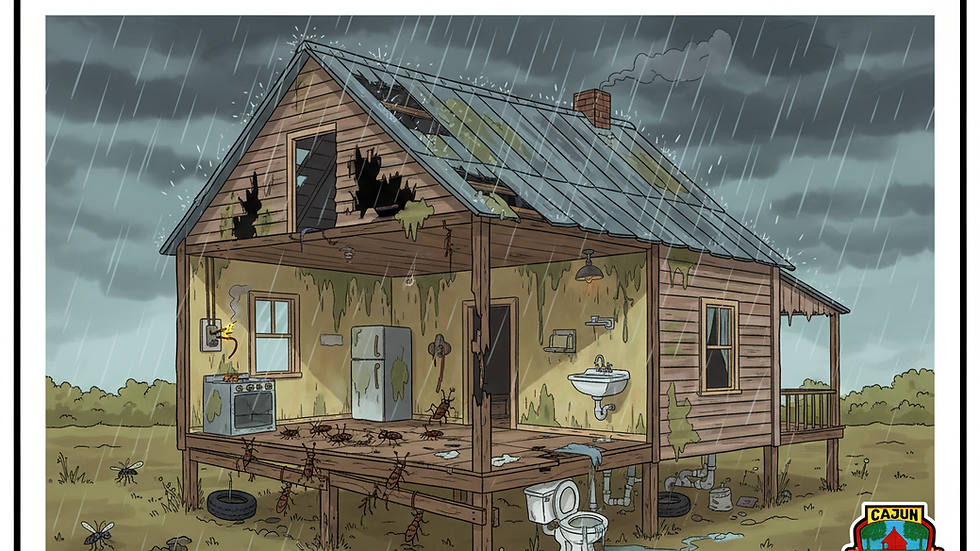
5. Termite Exposure
South Louisiana is known for termite activity, and homes from this era have had decades of exposure. Signs of termite damage can include:
Wood that sounds hollow
Soft trim
Sagging areas
Repaired sections that may go unnoticed
Termite damage does not always indicate a major disaster, but it can affect the scope of your remodel.
6. Old Windows and Rot Around Openings
Many homes from this era still have older windows or poorly updated ones. Common problems include:
Wood rot around windows
Air leaks and drafts
Water intrusion at trim
Condensation issues
If you notice peeling paint around windows, it may indicate moisture infiltration.
7. Insulation That Doesn’t Meet Louisiana Standards
Many older Louisiana homes have:
Minimal insulation
Inconsistent insulation
Incorrectly installed insulation
Air leaks from attics or crawl spaces into living areas
These issues can lead to:
High energy bills
Uncomfortable living spaces
Humidity problems
Constantly running air conditioning
Air sealing and smart insulation upgrades can often yield better results than expected.
8. Bathrooms Not Designed for Modern Living
Bathrooms from this era were not built for contemporary needs. Common issues include:
Weak ventilation
Small layouts
Moisture trapped behind old walls
Old tub and shower systems with hidden damage
Louisiana bathrooms require effective moisture management, not just cosmetic upgrades.
9. Additions Built at Different Times
Many homes from the 1950s to 1970s feature additions. These can create:
Uneven floors where structures meet
Odd rooflines that may leak
Walls that are not square
Mixed framing styles
HVAC balance problems
Remodel planning should encompass the entire house, not just the room being updated.
10. Outdated Layouts with Great Remodel Potential
Many homes from this era have:
Chopped-up kitchens
Smaller dining spaces
Limited pantry storage
Tight laundry rooms
Small bathrooms
The good news is that these layouts often remodel beautifully into more open, functional spaces, especially with skilled carpentry and thoughtful planning.

Prioritizing Your Remodel: What to Fix First
If you want to create a smart priority list before investing in finishes, consider addressing issues in this order:
✅ Water intrusion (roof, windows, siding leaks)
✅ Moisture and humidity control
✅ Structural and floor integrity
✅ Electrical safety and capacity
✅ Plumbing reliability
✅ Insulation and air sealing strategy
✅ Finally, finishes (floors, trim, paint, tile, cabinets)
This approach protects your budget and ensures your remodel does not fail prematurely.
What Homeowners Often Underestimate
The Real Cost Isn’t Just the Aesthetic
The hidden work that ensures the aesthetic lasts includes:
Moisture control
Framing corrections
Electrical updates
Plumbing reliability
Wall preparation and detail work
When these elements are executed correctly, the home feels brand new and maintains its integrity.
Are These Homes “Good” Homes to Remodel?
Absolutely. Most 1950s to 1970s Louisiana homes offer numerous advantages:
Strong materials
Real wood framing
Desirable neighborhoods
Significant potential
They simply require the right plan, priorities, and craftsmanship.
Planning a Remodel on a 1950s–1970s Home?
At Cajun Conservation, we specialize in remodeling older homes across South Louisiana. We understand what to look for before your budget gets stretched.
Question for you: What year is your home, and is it raised (crawl space) or on a slab foundation?
For more insights on preserving the unique character of your home while upgrading for modern comfort, visit Cajun Conservation.


Comments